Background Music, Foreground Bass: Los Kumbia Kings’ Strange Second Life on Screen
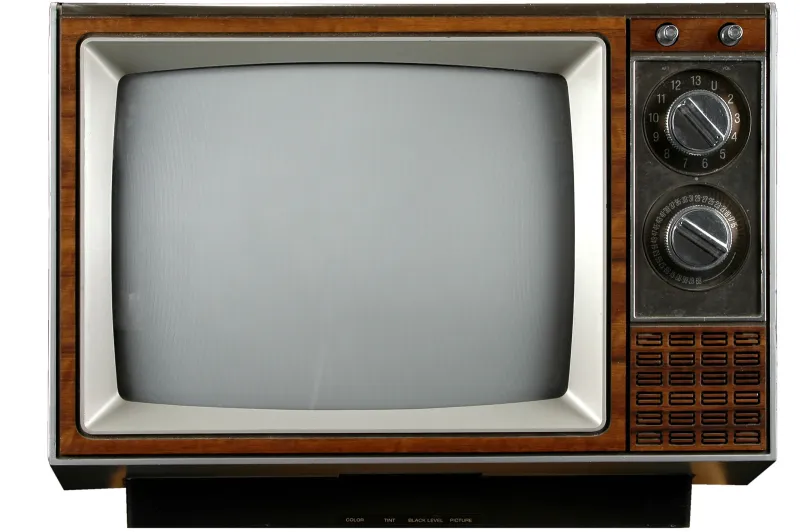
Photo: television screen glowing in a dark living room with speakers, via i.pinimg.com
There is a specific kind of recognition that happens in front of a television. You are half-watching something — a comedy, a cooking show, a highlight package — and the scene changes, and a keyboard figure comes in two beats ahead of the picture. You know it before you know it. Then you are not watching the show anymore. You are in a rented hall in 2002 with the lights too bright and somebody’s primo hogging the floor.
That is the thing about this catalog: the hooks are portable. They survive the trip out of the dance hall and land somewhere else almost intact, and they do it for reasons that are more technical than sentimental.
Why the hooks travel so well
The lead voice is a keyboard, not a singer. A synth line can sit under dialogue for a full minute and nobody notices it is there until they do. A vocal has to be mixed down, chopped up, or buried — and all three options weaken the song. The keyboard lead is the single biggest reason these tracks work as cues.
The bass sits below the speech range. That low end reads to the ear as energy rather than as melody, which means an editor can leave it loud without stepping on a line of dialogue. Most of the “party” in a party scene is coming from the bottom of the mix.
The hooks are short. Four bars, sometimes two. That is exactly the length an editor needs for a transition, a match cut, or a walk through a doorway. Songs with long, patient builds are a nightmare to license into a forty-second montage.
The tempo is friendly. This stuff lands in a range that matches walking, chopping vegetables, and the pace of a group scene without forcing the cut rate up. You do not have to make a frantic edit to justify the track.
The coro sounds like a crowd. The moment a chant shows up, the picture implies a room full of people — which is worth an enormous amount to a production that only had twelve extras and a Saturday.
The placements that work
The ones that land treat the song as architecture rather than decoration. A family comedy setting a quinceañera scene and letting the track run under the whole thing, unedited, barely faded — that works, because the song is doing what it does in real life. A regional sports promo using the keyboard hook as a bed under Friday-night highlights works for the same reason: it reads as celebration without demanding attention.
The weaker cousin is the “we are in Texas now” transition — the three-second bumper on a travel or cooking show where any Latin track could have filled the slot. It is not a crime. It is just wallpaper, and wallpaper never sold a record.
Where a sync flattens the song
When the bass gets pulled out. This is the most common damage. Mix engineers on a television timeline are trained to protect dialogue, so the low end goes first. But this band’s groove lives down there. Strip the bass and what is left sounds like generic Latin flavor — pleasant, anonymous, and a hundred percent replaceable by a stock loop.
When the needle drop is a punchline. Four seconds of a chorus under a joke about a bad DJ or a wedding gone wrong can freeze a song into a meme. It happens fast, and it is hard to reverse.
When the edit skips the pickup. These hooks have a wind-up. Drop the track cold on the downbeat of the chorus and you lose the thing that made the chorus feel earned. The song sounds like a ringtone.
When the soundalike shows up. Nothing flattens a catalog faster than a rerecorded, rights-friendly imitation. The notes are right. The swing is not.
What a great placement actually does
It sells the room, not the song. The best uses of this music on screen do not ask you to notice the band — they ask you to believe that a family is dancing in a hall, that the grill is hot, that the night is going well. The song gets you there in four bars and then gets out of the way.
That is a compliment, by the way. Plenty of artists would kill for a catalog that can carry a scene without competing with it.
Why this matters in 2026
Streaming has quietly turned this into a discovery engine. Someone hears a hook under a thirty-second scene, Shazams it, and lands on an album that came out before they were born — and then a week later they are in a group chat arguing about which version is better. The dance floor is no longer the front door. Sometimes the front door is a television in another room.
Which is why the licensing side of this story is worth watching closely. A good cue can extend a song’s life by a decade. A lazy one can turn it into background noise that nobody bothers to look up.
The mute test
Here is a small parlor trick for your next rewatch. Watch a scene with the music muted, then watch it again with only the audio — no picture. If the track still moves you with your eyes closed, the placement was honest. If it only works because a party is happening on screen, then the song was furniture.
Most of this catalog passes the test. That is not nostalgia talking. That is a bassline doing its job.