Buried on Side B: Five Los Kumbia Kings Album Cuts That Earn Their Place in a 2026 Set
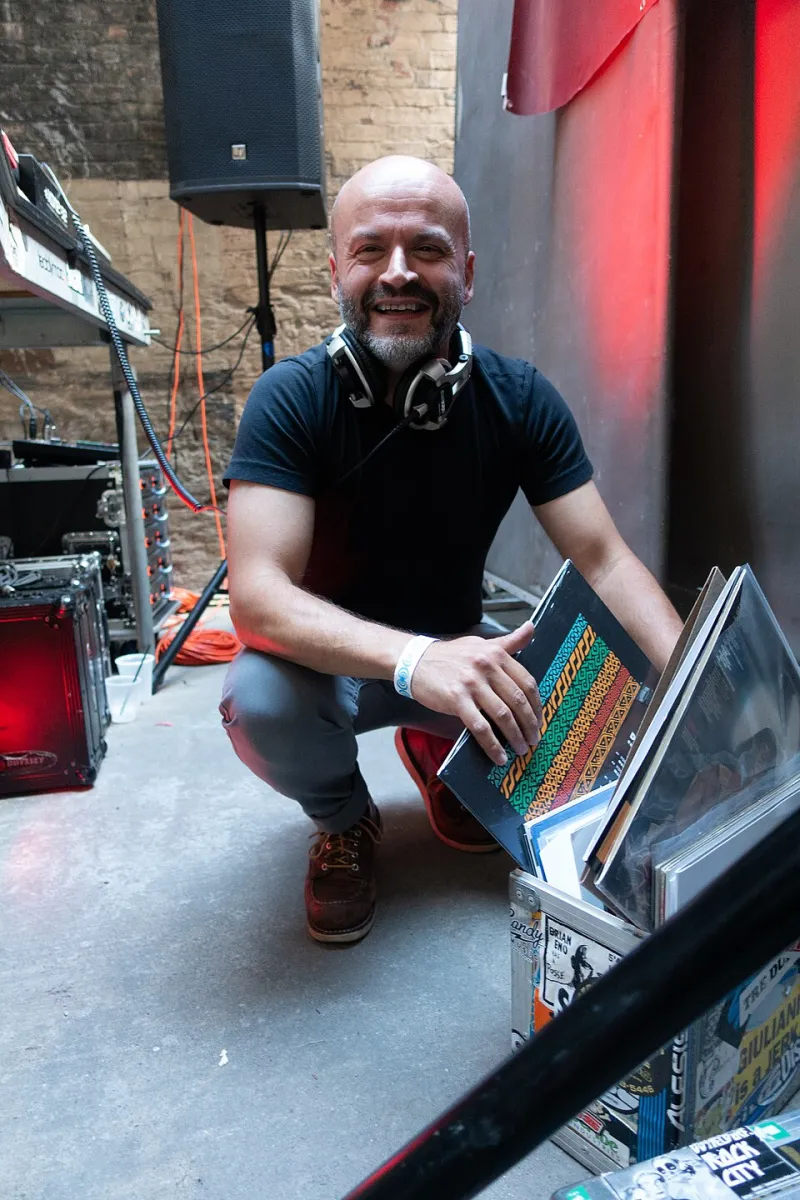
Photo: Deckblad, CC BY-SA 4.0, via Wikimedia Commons
There is a version of a Los Kumbia Kings night that everybody already knows. The singles come out, the floor fills, the tías do the thing with their shoulders, and by 12:15 somebody is filming a chorus on a phone. Great. Reliable. Also, if we are being honest, a little worn.
The other version — the one that rewards whoever actually owns the CDs — runs on album cuts. Tracks that never got the push, never got the video, never got the two-week run on a station out of Corpus or Fresno. Some of them are buried for good reason. Some of them are better than half of what sits on the greatest-hits comp your tío keeps in the door pocket.
So here is the practical case for the second version, plus a rulebook for sneaking these into a 2026 set without sending anyone to the kitchen.
Why the deep cuts got buried
Three reasons, and none of them are “the songs were bad.”
First, the singles won on math. Latin radio in the late ’90s and early 2000s ran on tight playlists, and a Kumbia Kings album was built as one or two obvious singles plus a lot of material aimed at the people already in the room. Second, these records were sequenced like live shows — a hot open, a dip, a slow spot for the couples, a closer that resets everything. The dip track is nobody’s single, but it is somebody’s favorite. Third, the experiments got pushed to the back half: the keyboard patch that sounds like it came out of an arcade cabinet, the bass mixed louder than the lead vocal, the coro that repeats four words until it stops being a lyric and becomes a chant with no author.
One honest caveat before the list. Pressings differ, compilations repeat, and a lot of us grew up on burned copies where the running order was whatever the person who made the disc decided it was. Treat this as a set-list argument, not a discography citation. If your copy has a different sequence, you are still right.
The five worth stealing
“Te Quiero a Ti”
The romantic mid-tempo that never gets invited to the party. To my ear it is the clearest case of the band trusting a keyboard to do an accordion’s job, and doing it without apology — the line carries the melody while the bass just walks. It is not a ballad, and that distinction matters. Use it third or fourth, before the floor is full, while people are still holding plates and circling the food table.
“Dime Quién”
The chorus is a question, and questions travel across a crowded room. The verse starts almost conversational — low, close, no fireworks — and then the harmony stacks up underneath it and the whole thing lifts. It is a setup song. Put it directly before a hit, never in place of one, and it will do the work of making the hit feel bigger.
“Boom Boom”
The goofy one. Chant-first, call-and-response built into the structure, the kind of track that works best with kids in the room and adults pretending they are not participating. It is a backyard song, a driveway song, a living-room song with the ottoman pushed against the wall. On a formal dance floor it can feel slight. In a garage with the door open it is perfect.
“Mi Dulce Niña”
The sweet one, and the riskiest placement on this list. Wrong for a club, wrong for 10 p.m., absolutely right for the last hour of a wedding when the older couples are still up and the DJ has quietly stopped trying to be cool. This is the deep cut you play for the people who drove four hours to be there.
“Fuiste Mala”
The one DJs sleep on. A two-chord vamp with a bass figure that does most of the talking, it is the closest thing here to a straight dance-floor weapon. You can slot it around 10:30 with no explanation and no windup. Of the five, this is the one that most deserves the spot it never got.
Rules for dropping a deep cut in 2026
Never open cold with one. The first three songs of any set are a contract with the room, and the room has not signed anything yet. Earn the trust first.
Use the sandwich. Hit, deep cut, hit. That is the whole method. The familiar track buys you ninety seconds of curiosity, and the deep cut spends it.
Mind the tempo gap. If the cut runs more than a handful of BPM away from what just played, the floor will read it as a bathroom break whether it is one or not.
Apply the ninety-second rule. A recognizable chorus needs to land inside the first minute and a half. If it doesn’t, you had better be playing a wedding where people are seated and happy.
Read the room honestly. Thirty people and a birthday cake? Educate them. Sixty people and a cash bar? You are a jukebox, and jukeboxes do not dig.
Announce it. A quick “this one’s off the second album” buys patience, and patience is the only currency a deep cut has.
Where the deep cuts still fail
Bachelorette parties, the first-dance hour at a wedding, and any quinceañera entrance. Also, and this is not negotiable: never follow a deep cut with another deep cut. That is not curation. That is a DJ telling a room to leave politely.
The point of digging is not to prove you know more than the crowd. It is to prove the catalog is deeper than the two songs everyone screams for — that this band made albums, not just hits, and that a good party can be thrown more than one way with the same ten records.
Start with the sandwich. See what happens at 10:30.